Chapter 1
Solar Lighting Guide 2025
An unbiased guide to what to look for in a solar lighting system, so your project holds up long-term.
Table of Contents

Chapter 1
The Benefits of Solar Lighting

Chapter 2
10 Major Applications of Solar LED Lighting

Chapter 3
Economics: Saving Money Through the Sun
Chapter 4
What Are the Parts of a Solar Light?

Chapter 5
Styles of Light Fixtures
Chapter 6
LED 101

Chapter 7
Deep-Cycle Lead-Acid Batteries

Chapter 8
The Energy Management System
Chapter 9
Solar Lighting Design Guide

Chapter 10
Solar FAQ

Chapter 11
Conclusion

Solar lighting is a fantastic choice in opposition to traditional grid-tie lighting because of how cost-effective it is. In sun-heavy areas, these lights have a 5-day autonomy, meaning they can operate on battery power without any recharging for 5 cycles.
Here Are the Advantages You Get with Solar Powered Lighting
- ✓Solar lights are extremely cost-effective. Many corporations, businesses, cities, etc. have saved thousands of dollars up-front and over time because of no grid-tie connections and no energy bills over time.
- ✓Solar lights are more secure — in times of emergency or a power failure, these lights stay on since there's no connectivity to power grids that are liable to fail.
- ✓Versatility. Solar lighting works well for remote areas, cities, construction sites, parks, streetways, and other areas. Some models are portable, so you can move them wherever needed.
- ✓No trenching. Solar lighting systems don't need trenching to connect to power, so the grounds in the area can be kept intact — this is important for parks and protected lands.
- ✓No electricity bills. You needn't worry about lighting bills with solar since the panels draw free electricity from the sun.
- ✓Solar energy is one of the cleanest forms of energy. There are no emissions or by-products from generating energy from the sun.
Chapter 2
10 Major Applications of Solar LED Lighting

Solar lighting is incredibly versatile. These ten applications show that businesses, municipalities, corporations, parks, and public places of all sorts can benefit from solar from numerous standpoints.
1. Solar Lighting for Streets
One of the largest reasons why municipalities choose solar for their street lighting is because of how much of a nuisance construction can be, especially if lights are previously installed in the area. That's not the case with solar. A single solar light can be assembled and installed in less than two hours — no road closures, blocked-off construction sites, or loud drills in the morning.
2. Parking Lot Lighting — Solutions Fast
Sometimes companies need solutions quickly. Solar lighting is a fantastic solution for lighting parking lots since the average time it takes to install a system of solar lights (especially if pedestals are already present) is about 2 working days. Solar lights preserve parking lot pavement and keep commuters safe at night when safety can be a concern.
3. Parks and Park Beautification
Park lighting is notorious for installation difficulty for two reasons: grounds and public access. The best idea for lighting a park is using solar — with quick, clean installation, lights can be erected in typically a day's time once the pedestals are in place and dried. Plus, the best way to be in harmony with nature is to use the most efficient, naturally-sourced energy to power lighting.
4. Construction — Gotta Have Some Light
Solar lights are quick and easy to deploy. They can be left on location to recharge without the need for noisy, smelly generators that require refueling. Once the project they assist with is completed, they can be hauled to the next job site.
5. Military Solar Lighting
The military requires a standard that grid-tie options don't always offer. Training areas and armories are intentionally left separate from a lot of power grids. Solar lights can be paired with motion sensors to instantly turn on at the first sign of any movement. If your installation needs to be managed remotely, each light can be integrated into a satellite monitoring system to ensure optimal functionality, even when nobody is around.
6. Security Where You Need It Most
When paired with a motion detector, solar lights can be used to deter theft, enhance security, and provide light on an as-needed basis. The batteries charge via the solar panels during the day and then provide power for the light fixtures at night. Lights for this application are often found in rural areas where open fields need light to work in, as well as commercial and residential areas to prevent vandalism.
7. Airport Lighting
Sometimes airports require extra lighting for commuters to safely get from point to point. Airplanes on occasion release passengers without a connecting gate at night. Solar lighting is perfect for such a situation — mobile solar towers or portable lights can be transported out onto the airport tarmac where the lights can guide passengers safely into the terminal.
8. Solar Retro-Fit Lighting
Are poles or pedestals in place, but with the lights out? Not a problem. Solar lighting can be installed onto older poles through a retro-fit process. This means less hassle and quicker installation, provided that the poles meet durability and quality standards.
9. Solar Sign Lighting
Solar lighting for signage is perfect for businesses looking for more cost-effective ways of lighting their signs. Billboard lighting can be problematic to power since signage sits by roadways, near bushes and pavement, and digging into the ground to run power can be costly. With solar, you needn't worry about permits or excessive trenching just for commuters to see your business signs at night.
10. Solar Canopy / Mailbox / Bus Stop Lighting
There are solar lighting options for canopies, mailboxes, and bus stops as well. Projects like these tend to focus lighting in small areas, so they use fewer lights. You can customize systems to fit the surroundings of the project area naturally — it's near impossible to trench and wire for power in some mailbox areas, so solar is a natural option.
Chapter 3
Economics: Saving Money Through the Sun

By far, one of the most significant reasons for purchasing solar lighting is the economic benefit of solar power. There are numerous monetary reasons to install a lighting system that uses solar power — here they are, with the most lucrative first.
Solar-Powered Lighting Doesn't Require Trenching
Solar lighting uses photovoltaic technology to produce electricity — it doesn't require electrical conduit, wiring, or trenching. Numerous solar projects have saved customers several thousands of dollars on the first day of installation.
Save Money with Zero Energy Bills
The energy bill for traditional lighting costs $150–250 per year. Solar lighting uses the power of photovoltaics to produce electricity, which means for the entire life of each solar lighting system, you won't receive a monthly bill to pay.
State Incentives
There are a lot more than just federal incentives to earn money back through your solar installation. Every state has plenty of incentives to discover, and most of them are listed through the Database of State Incentives for Renewables & Efficiency (DSIRE) website. Be sure to investigate what financial benefits are available to you immediately after your solar project is installed — free money is always a great thing.
The Bottom Line
The technology behind solar power has decreased in price by 99.9% over the past 50 years, so the return on investment has only grown. Based on a comprehensive cost analysis of solar lighting systems against grid-tie counterparts, solar saves $3,400–4,000 per system over the life of ownership.
Chapter 4
What Are the Parts of a Solar Light?

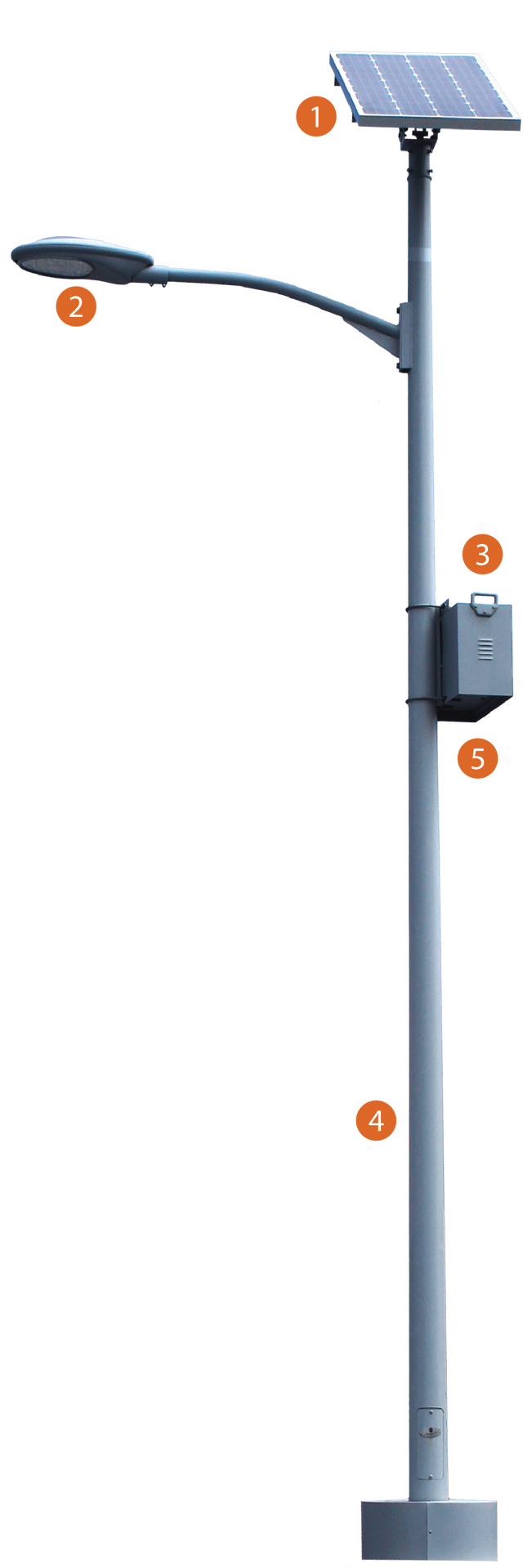
A solar light is a system of parts that work in harmony to generate power from solar exposure, store power, and re-use that power in an efficient manner to light a general or specific area. There are many variations to how the parts are configured to achieve the best result for its intended environment, but the overall structure is always there:
1. Panel
Every solar light ships with a full assembly of mounting hardware and angling brackets to ensure the solar panel will be sturdy and properly angled to capture as much solar energy as possible. There must be a balance between material strength and weight since the panel sits in a vulnerable position for years, facing weather fluctuations and wind.
2. Fixture
The fixture is what houses the light. With solar LED lighting, fixtures come in arrays of several LED emitters embedded into a full array. Quality fixtures are wired in a parallel configuration instead of series — check manufacturer documentation to learn about the wiring of a given fixture. The most widely used fixture is a cobra head, but since solar LED lighting is used in parks, alternative fixtures may be more aesthetically pleasing.
3. Energy Management System
This controls the power between the light fixture, panel, and battery. Often the brains of the system, it can control the light output of the fixture and maintain battery health.
4. Poles
Quality poles are shipped with felt to prevent damage in transit. Solar light poles vary in height and material build in order to last — 50 years is a common pole lifespan.
5. Battery
A battery comes with the proper wiring, battery box, and mounting materials. You can also opt to bury the battery underground to avoid cold temperatures — this step is typically done before the concrete pedestal is poured and cured.
Chapter 5
Styles of Light Fixtures

Thankfully, there isn't just "one type" of light fixture. Here are some common styles and their most common applications.
Cobra Head
Streets, roadways, parking lots
Decorative
Parks, boulevards, town squares, art districts
Bollard
Pathways, suggestive perimeters
Light Bar
Shelters, canopies, bus stops
All in One
Fixture + panel + battery in one unit — great for retrofits
Spotlight
Business/city entrance signs, highway billboards
Flood
Construction, mobile projects needing a wide cast
There are countless other fixtures, the vast majority of which aren't applicable to public outdoor lighting, but these are a few common ones you'll see used in solar lighting.
Chapter 6
LED 101

Light Emitting Diodes (LEDs) are the result of decades of research, work, technological development, and combined knowledge from several scientists and pioneers in the lighting field. They're incredibly efficient for their lumen output compared to other lighting technologies, and pair well with solar panels to produce clean power that lasts all night long. Here are some standards to adhere to for quality.
Color Temperature
White LEDs are the result of a phosphorus layer on top of a UV-emitting diode, and that phosphorus layer often determines the color temperature of the light. A common color temperature for LEDs is 4,000K, or "cool white," but this can be adjusted based on the needs of the client. Color temperature for lighting is measured on the Kelvin scale between 1,000K and 10,000K, with 1,000K reading much "warmer" and 10,000K reading very "blue-white."
Distribution Types of LEDs
LEDs are arranged in different patterns for their fixtures, named Type I through V. Generally, Type I and II fixtures are best for parks and walkways, so decorative fixtures are more common there. The latter types are best for functionality, which suits parking lots and construction areas — having the right fixture for the right application is a must.
Beam Angle
Beam angle is the angle at which light is distributed from a light source. The specific degree measurement varies by manufacturer, but a beam angle generally falls under four categories:
- ✓Spot — 5–20 degrees
- ✓Flood — 21–35 degrees
- ✓Wide Flood — 36–49 degrees
- ✓Very Wide Flood — 50–120 degrees
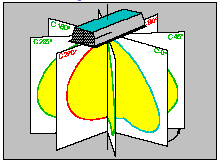
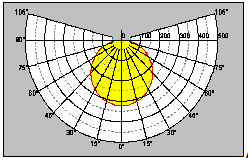
Luminous Intensity Distribution Pattern
This pattern shows the direction and intensity of light from the light source. Two graphs commonly used to display light patterns are the plane system and the polar curve.
Chapter 7
Deep-Cycle Lead-Acid Batteries: The Choice for Solar Lighting

Batteries are complex devices because they take in electrical power, store it as a chemical, and then revert it back to electrical power when needed. Lead-acid batteries have certain qualities that make them ideal for solar street lights:
Constant Charge-Discharge
Solar lights work on a daily cycle of gathering and using energy — so a battery needs to charge and discharge constantly. These batteries can take this constant rate of charge-discharge easily without losing too many power cycles.
Great Depth of Discharge
Depth of discharge refers to how much a battery can be safely discharged without sacrificing too much of its overall health. A lead-acid battery's optimal depth of discharge is about 15%; a properly-sized solar lighting system will most often drain the battery to this level, with 20% as the max recommended level.
All-Weather Resilience
These batteries are self-heating, so they withstand cold temperature drops, and they also perform well in heat. In some extreme climates, however, it may make more sense to bury them to maintain their optimal charge.
Chapter 8
The Energy Management System: Controlling Power in a Solar Light

The Energy Management System (EMS) is an efficiency system that ensures energy is stored in the battery properly and then delivered to the driver when the fixture needs it. The EMS consists of two components — the driver and the controller — which can either be separate components or a combined build.
How Controllers Work with Solar Lights
Controllers regulate power load between the panels and the batteries — they prevent the batteries from overcharging and stop reverse-current flow, i.e. electricity flowing back from the batteries to the panels at night.
Autonomy Setting
Controllers can energize the LED luminaires in several modes: full output; full brightness with automatic shut-off (extending system autonomy well beyond 5 nights); or split night (full output for the first 5 hours, then 40% for the remainder of the evening), which expands autonomy from 5 to about 7 or 8 nights and extends the life of all the electronic components since they're used less frequently.
What Does a Driver Do for an LED Light Fixture?
Drivers take raw incoming voltage (DC 12V) and alter it to the ~85V a fixture needs. Controllers tell the drivers what to do with the light level — a fixture doesn't just have one brightness setting, it can be dimmed at certain times of night for the proper level of illumination. Without a driver, LEDs would stay on at full brightness all the time, burning through stored solar energy and reducing the longevity of the fixture's LEDs.
Chapter 9
Solar Lighting Design Guide: More Than Meets the Eye

What's important in solar lighting is that the design calculations are accurate. Start by choosing the best fixture style for the particular application — overhead fixtures provide better lighting for streets, parking lots, and pathways, whereas sign lights and floodlights are good for directional lighting and wall washing. There are other factors to consider when designing a system:
Light Spacing
The best spacing for light is determined by IESNA standards, but since each project is different, special areas or needs are considered — this is where a knowledgeable lighting consultant can help get the best results for a project.
Unique Locations
Consider the location of each light as it's planned — solar panel obstructions are common in parks (trees) and metropolitan areas (skyscrapers). The surroundings for a project site aren't always ideal for solar energy.
Use the Volta
The Volta series is a unique solar light that has the solar panel integrated into the pole — the panel wraps around the pole so it appears as one unit instead of two separate components. If you're interested in the Volta for your project, be sure to consult a lighting engineer, as the Volta is most efficient in certain locales.
Bury the Batteries
Batteries aren't typically buried since they'll need replacing after an average of 5 years. However, when presentation and aesthetics matter more than component accessibility, you can opt to place the battery underground — also a good way to regulate battery temperature in extreme climates.
Compliance Considerations
There are some "checkmarks" lights need to hit to be considered "best" for public use. The first is International Dark Sky Association (IDA) Compliance — a set of guidelines to ensure lighting isn't harmful to living organisms.
Light Spill. The IDA recommends fixtures that don't have a "spillover" of light past the 180-degree plane of the fixture's angle. Light escaping past this plane is a telltale sign of a poor-quality fixture.
Color Temperature. IDA compliance states the color temperature from a light fixture should be no more than 3,000 Kelvin. 5,000K is generally considered "too blue" for outdoor lighting and is rarely used anymore since it's been linked to negatively influencing sleep cycles.
Chapter 10
Solar FAQ

Have additional questions about solar? We've covered the most commonly asked questions about solar lighting below.
Can solar street lights remain on during the evening even if we have cloudy days? Yes, systems are designed to provide at least 5 nights of power even without sun. We design systems around the winter solstice — the shortest day and longest night — by analyzing local solar and weather conditions to ensure lights stay on when needed most.
Can solar lights run out of energy? Not from a quality manufacturer. It's important to know how to configure a light to get the best functionality from it.
Do some solar light systems lose power because of not enough solar energy? Only improperly-sized systems suffer significant power loss from poor sun hours.
I live in a strong wind zone — are solar lights strong enough to withstand high winds? Yes, most systems are designed for 140 mph winds. Some projects in hurricane zones handle winds up to 180 mph.
What is the best solar panel technology for lighting needs? "Best" is subjective, but the most commercially available and most researched option is monocrystalline silicon — more efficient than other technologies and using less harmful materials.
What is the difference between high-pressure sodium fixtures and LED fixtures? LEDs cast more natural light. HPS fixtures are efficient light sources, but the poor quality of the light makes it harder to tell colors apart, which can matter where safety is a concern.
Can solar be harmful to the environment? It depends what the panel is made of — cadmium is a highly toxic metal used in some solar technologies. Reputable manufacturers use monocrystalline silicon, a form of sand.
Where does solar not work well enough to sustain the light fixtures? Every situation is different, but solar often underperforms in downtown areas where the sun is blocked by skyscrapers and other obstructions.
How much money do I save with solar lighting? Every situation is different, but on average there's a savings of about 20% versus the original cost of a grid-tie project. Some case studies have saved businesses approximately half a million dollars purely on trenching and wiring fees, not counting energy and maintenance savings.
What kind of maintenance should be done on solar street lights? Solar lighting systems are essentially maintenance-free. Rainfall usually keeps panels clean; in heavy-snow areas you may need to brush panels off occasionally, though given the panel's angle, snow usually slides off once the sun rises and temperatures climb.
How long will the batteries last for solar street lights? Batteries typically last 5–7 years.
Chapter 11
Conclusion

This solar lighting guide is intended to help you understand what to look for when searching for quality parts that will justify your investment, reduce confusion over what components serve what function, and ensure your solar lighting project will last long-term.
We hope this knowledge base gives you a solid understanding of how a solar light works, what the pitfalls are, and how to determine what product and manufacturer are right for your project.
Get Started
Professional Consultation
Fill in your project details and one of our lighting experts will get back to you within 24 hours.
Questions? Call us at 949-609-9636
Ready to Size Your Project?
One of our lighting experts will size your project and get back to you within 24 hours.