Warehouse & Parking Lot Security: Why All-Night Full Brightness Is Non-Negotiable
A parking lot that is fully lit at 8 PM but dims to 40% by 2 AM is not a secure parking lot. It is a liability. The hours between midnight and dawn are precisely when criminal activity — vehicle break-ins, cargo theft, assault, trespassing…
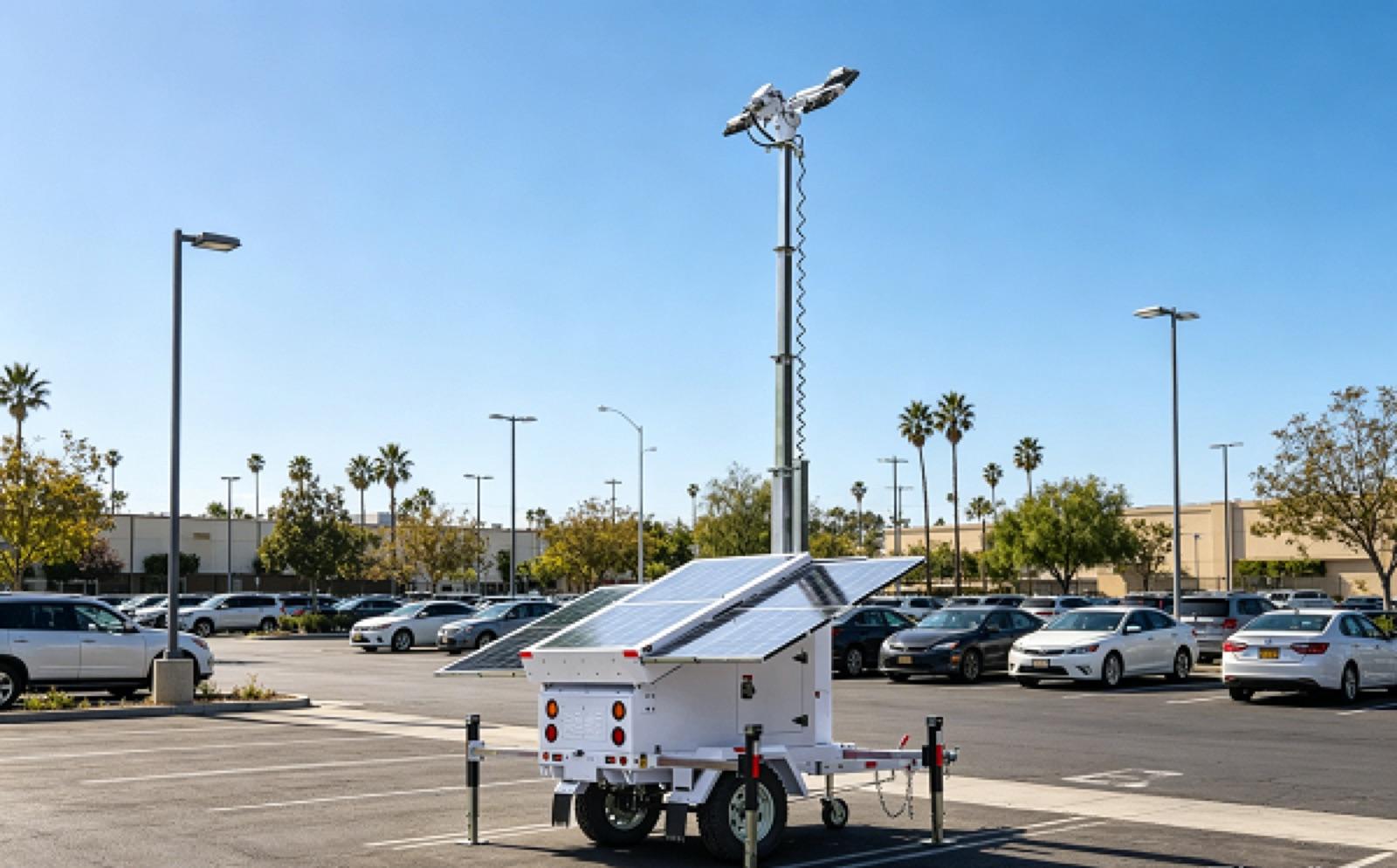
A parking lot that is fully lit at 8 PM but dims to 40% by 2 AM is not a secure parking lot. It is a liability. The hours between midnight and dawn are precisely when criminal activity — vehicle break-ins, cargo theft, assault, trespassing — is most likely to occur. If your lighting dims when the risk peaks, you have a security failure, not a security system.
The Security Case for Lighting: What the Research Shows
The relationship between lighting and crime is well-established in criminology and urban planning. The CPTED framework (Crime Prevention Through Environmental Design) identifies adequate lighting as one of the three foundational strategies for reducing criminal opportunity — alongside natural surveillance and territorial reinforcement.
The mechanism is straightforward: adequate lighting increases perceived risk of detection for potential offenders. A well-lit warehouse perimeter, loading dock, or parking lot removes the concealment advantage that criminals rely on. For commercial property owners in Southern California — where cargo theft, vehicle break-ins, and copper wire theft are all documented growth crimes — lighting is a first-line security investment, not a cosmetic amenity.
According to an LASD detective quoted by CNN in December 2025, copper theft incidents in Los Angeles are occurring daily, and construction sites and commercial properties are frequent targets. Dark perimeters are not incidentally targeted — they are specifically selected.
Source: CNN, December 22, 2025
— https://www.cnn.com/2025/12/22/economy/copper-wire-theft-att-outages
The Problem with Dimming Solar Lights
Solar street lighting has a well-known reputation problem: many products dim significantly during the second half of the night to conserve battery energy. This is an engineering compromise driven by undersizing the battery storage and solar array to reduce upfront cost. The result is a product that delivers full brightness for the first 5–6 hours of darkness, then drops to 30–50% output for the remaining hours.
For a warehouse facility with a 12-hour operational window, or a 24/7 logistics center with late-night truck arrivals, this is not acceptable. The security value of lighting is proportional to its reliability — a lighting system that dims when criminals are most active provides a false sense of security and potential liability exposure.
What Full-Night Brightness Engineering Requires
Maintaining 100% lumen output from dusk to dawn in Southern California requires engineering the system for worst-case conditions:
- ✓December/January solar harvest (shortest days, lowest peak sun hours — approximately 4.5 peak sun hours per day in Los Angeles vs. 6+ in summer).
- ✓Consecutive overcast days — Southern California is generally sunny but not uniformly so. Systems must be designed to maintain full output after 2–3 overcast days without recharging.
- ✓Battery chemistry and capacity should be sized to support full system autonomy — sealed GEL batteries are commonly used for their durability and reliable performance across varying conditions, while lithium iron phosphate (LiFePO4) is often selected for applications requiring extended cycle life, deeper depth of discharge, and strong temperature performance in Southern California climates.
- ✓LED driver efficiency — the driver must deliver consistent current to the LED array regardless of battery state of charge, ensuring lumen output does not vary as battery voltage decreases overnight.
Our solar street lighting products are engineered to meet all of these criteria. Each system is sized for local worst-case solar conditions, providing full lumen output throughout the entire night — not just during the first half.
Compliance: IESNA Illumination Standards for Parking Facilities
Commercial parking facilities in California are subject to illumination standards based on IESNA (Illuminating Engineering Society of North America) guidance and California Building Code requirements. The minimum average maintained illuminance for:
- ✓Open parking lots: 0.5–1.0 footcandles average (with higher requirements near entrances and high-security areas)
- ✓Covered parking structures: 3.0–5.0 footcandles average
- ✓Building entrances and loading docks: 5.0–10.0 footcandles average
Solar lighting systems that dim to 40–50% after midnight fail to maintain these standards through the full operating period — creating both a safety issue and a code compliance gap. Full-night brightness systems maintain compliant illumination levels continuously.
The Copper Theft Dimension: Lighting Resilience and Security
There is a specific circularity in security lighting that is often overlooked: grid-tied lighting in high-theft areas is most likely to fail precisely because of the security threat it is meant to address. When copper thieves target a commercial property and strip the wiring that powers the perimeter lighting, they simultaneously steal the copper and eliminate the lighting that would deter further criminal activity.
This is not hypothetical. In Los Angeles, the copper theft crisis has left over 200,000 streetlights dark. Properties adjacent to or within high-theft zones face elevated risk — not just of copper theft but of the secondary crimes that dark, vulnerable perimeters invite.
Solar street lighting breaks this feedback loop. Because there is no copper to steal, the lighting cannot be knocked out by copper theft. The security system remains operational regardless of what happens to the utility infrastructure around it. This is security resilience — the ability of the system to maintain function under adversarial conditions.
Real-World Comparison: Grid-Tied vs. Solar for Security Applications
| Security Factor | Grid-Tied LED | Solar LED (Full-Night) |
|---|---|---|
| All-night brightness (dusk to dawn) | Yes (if grid is up) | Yes — guaranteed by design |
| Outage risk from copper theft | HIGH — theft knocks out lights | ZERO — no copper to steal |
| Outage risk from utility failure | YES — grid-dependent | No — off-grid |
| IESNA compliance through night | Yes (when operational) | Yes — full-night design |
| Response time after outage | Hours to days (repair crew required) | Instant — independent systems |
| Copper theft vulnerability | CRITICAL — theft target | None — no copper installed |
| RELATED: How Solar Street Lighting Permanently Eliminates Copper Theft VulnerabilityAND: The Copper Wire Theft Crisis: What Every Property Owner in Southern California Needs to Know |
Key Takeaways
- ✓Security lighting must maintain full brightness throughout the entire night — not just the first half.
- ✓Grid-tied lighting in high-theft areas faces an inherent vulnerability: copper theft knocks out the very lights that deter crime.
- ✓Solar street lighting eliminates this feedback loop by removing copper from the system entirely.
- ✓Our products are engineered for full-night, full-brightness operation — sized for worst-case Southern California winter conditions.
- ✓Full-night solar lighting maintains IESNA compliance continuously, reducing liability exposure for commercial property owners.
► Protect your property tonight. Get a free solar lighting assessment →
Professional Consultation
Fill in your project details and one of our lighting experts will get back to you within 24 hours.
Questions? Call us at 949-609-9636
Financing Available
Greenshine partnered with Balboa Capital, a top-rated direct lender, to offer fast, easy, and affordable equipment financing options.
Learn more →Related Articles
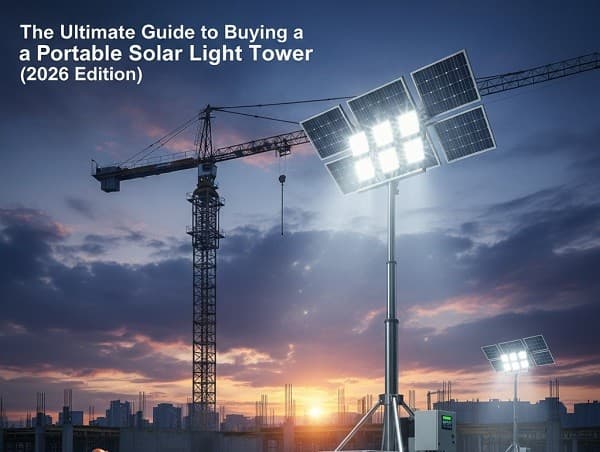
The Ultimate Guide to Buying a Portable Solar Light Tower (2026 Edition)
Buying a portable solar light tower in 2026 is one of the smartest moves a project manager can make. It solves the headache of fuel logistics, eliminates noise complaints, and slashes long-term costs.
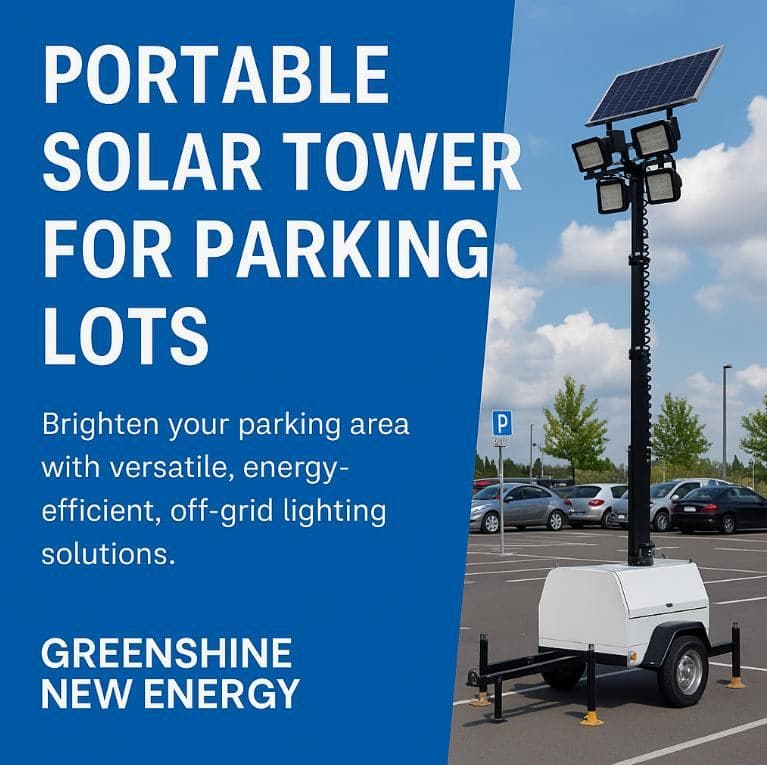
Portable Solar Tower for Parking Lots
At Greenshine New Energy, we provide mobile and portable solar light towers designed to deliver bright, sustainable light anywhere — without wiring, fuel, or utility costs.
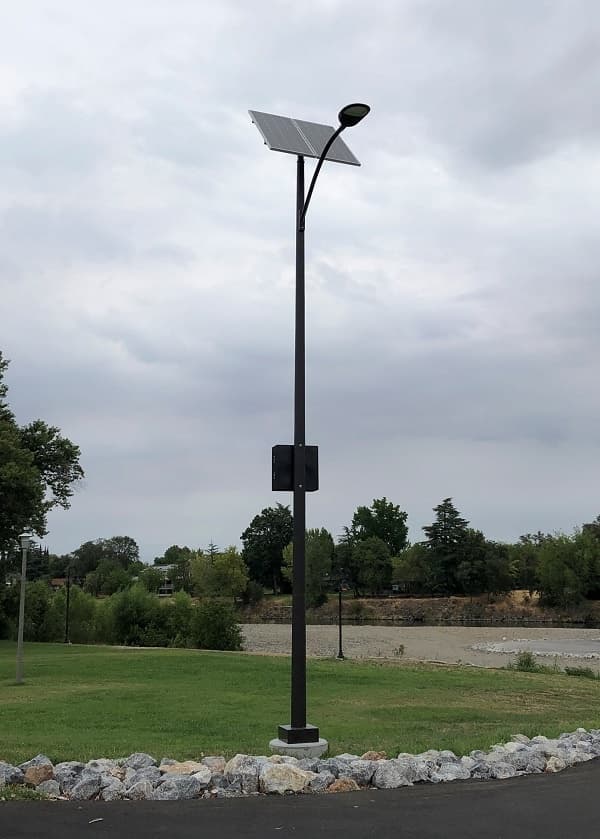
How Tall Are Solar Street Lights and Why It Matters for Your Project
Most solar street lights range from 12 to 30 feet, but the best performance comes from choosing a system designed for your project’s exact conditions — not a one-size-fits-all model.