Why Are Solar Powered Parking Lot Lights Safer Than Traditional Lights
A 2020 mass power outage in Medford, Oregon, left commuters stranded in the dark, a scenario solar-powered parking lot lighting is specifically built to prevent. Here's how, and what it costs.
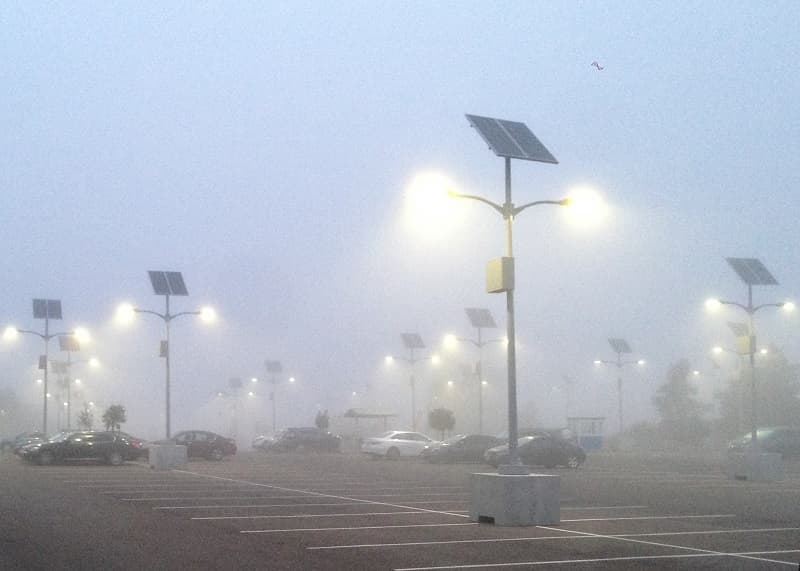
In November 2020, a mass power outage in Medford, Oregon, left thousands of commuters stranded in darkness, a situation made worse by unexplained loud noises in the area that raised real safety concerns before power was restored. It's exactly the kind of scenario that makes a strong case for lighting that doesn't depend on the grid at all, which is precisely what a solar-powered parking lot light provides.
How Solar Parking Lot Lights Actually Operate
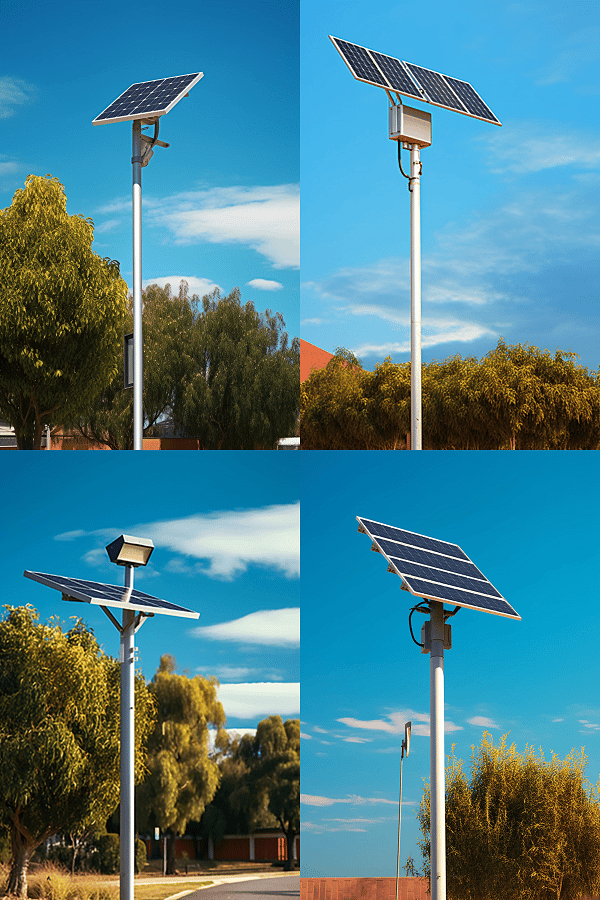
A solar fixture's panel captures photons from incoming sunlight through photovoltaic cells; those photons carry electrons that the panel captures and transmits to an onboard battery, typically sized to store roughly a week's worth of energy. A sturdy pole tops that battery with an LED fixture and light sensors that detect falling natural light levels, while an onboard energy management system controls output, ramping brightness up gradually at dusk or responding to motion as needed, rather than snapping instantly to full power.
Why That Makes Them Safer
- ✓Outage independence — traditional grid-dependent lighting fails during power outages, storms, or infrastructure failures; solar fixtures keep running because each pole stores its own power.
- ✓Extended autonomy — with unobstructed sky access, batteries can sustain up to five days of continuous operation, even through storms where sunlight is scattered and inconsistent.
- ✓Motion-sensor integration — pairing fixtures with motion sensors increases brightness only when it's actually needed, extending both battery life and the practical safety margin.
- ✓Proven in extreme conditions — a Greenshine installation in Guam remained fully operational through a severe typhoon and its aftermath, exactly the kind of grid-failure scenario solar lighting is designed to survive.
What It Actually Costs
Solar parking lot lights typically run about $1,000 more per fixture than a comparable traditional light upfront. That premium usually gets absorbed, and often reversed, by what a traditional installation requires that a solar one does not: trenching, wiring, and backfilling across an entire lot, costs that add up fast on any lot larger than a handful of spaces.
| Cost Factor | Traditional Lighting | Solar Lighting |
|---|---|---|
| Electrical infrastructure | Trenching and wiring required | None required |
| Ongoing energy cost | Monthly utility bill | Free after installation |
| Maintenance | Regular bulb and ballast service | Occasional panel cleaning, battery swap around year 5 |
| Available incentives | Limited | Solar investment tax credits, state and federal incentives |
A Trend That Keeps Accelerating
Solar equipment costs have also been on a steady downward trend for years, a pattern sometimes called Swanson's Law, where prices drop roughly 20% with every doubling of cumulative shipped volume. That trend, combined with the safety case laid out above, is why more property owners and municipalities are specifying solar for parking lot lighting rather than treating it as a premium add-on.
The Simple Case for Solar
Set next to a scenario like Medford's 2020 outage, the value of a parking lot light that keeps working when the grid does not is hard to argue with. Add the long-term cost advantage from skipped trenching and falling equipment prices, and solar parking lot lighting increasingly reads less like an upgrade and more like the safer default.
Professional Consultation
Fill in your project details and one of our lighting experts will get back to you within 24 hours.
Questions? Call us at 949-609-9636
Financing Available
Greenshine partnered with Balboa Capital, a top-rated direct lender, to offer fast, easy, and affordable equipment financing options.
Learn more →