Solar Light Towers Improve Mining Security and Compliance in West Virginia
How off-grid solar lighting enhances miner safety, reduces operational risks, and cuts costs — all while meeting MSHA standards
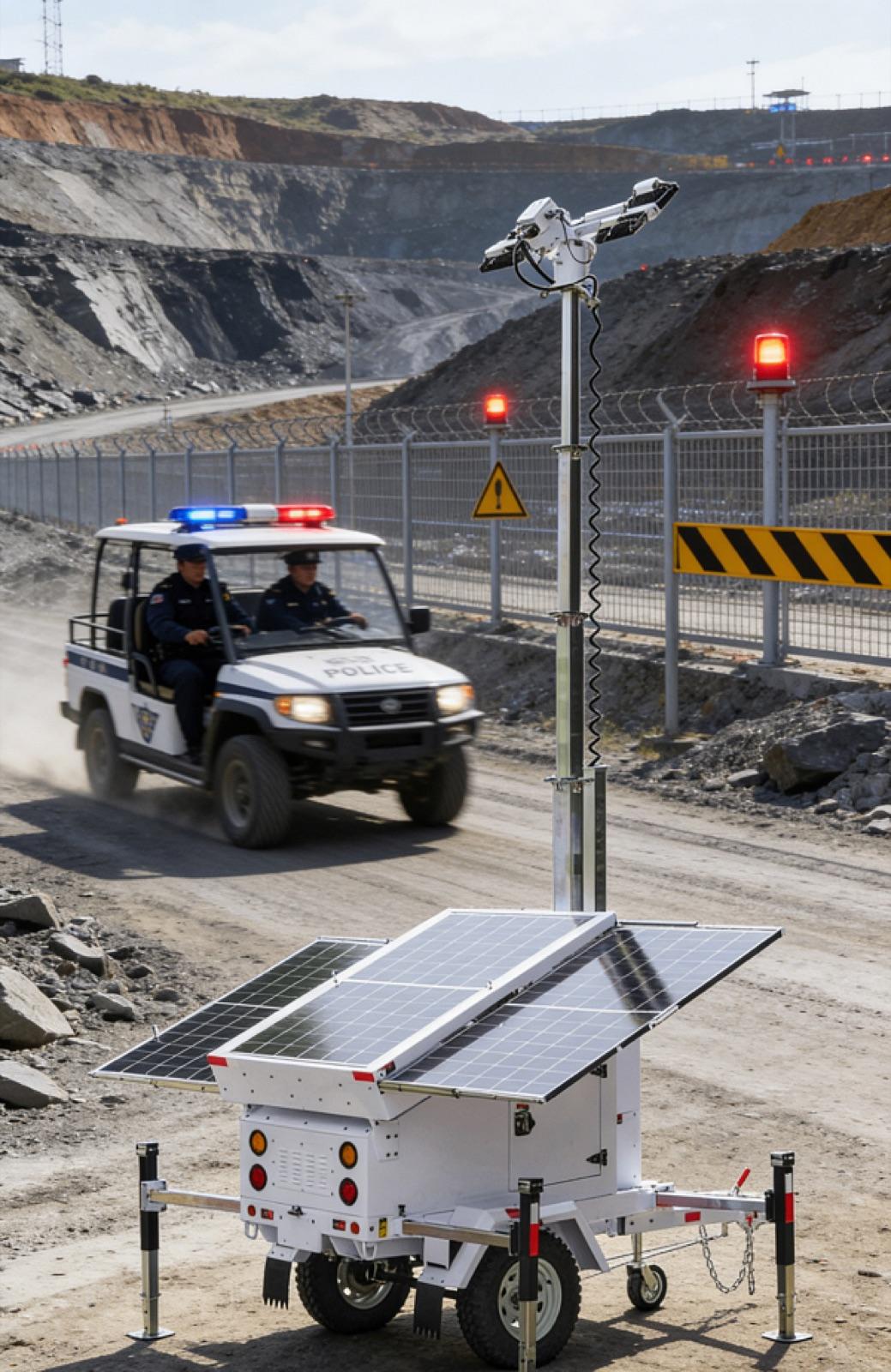
How off-grid solar lighting enhances miner safety, reduces operational risks, and cuts costs — all while meeting MSHA standards
West Virginia has long been synonymous with coal mining. From the hills of Wyoming County to the operations in Boone and Logan, mining remains the backbone of many local economies. But today, the industry faces mounting pressure — not just from market forces, but from a troubling safety record that demands immediate attention.
In 2025, mining fatalities nationwide rose 27 percent from the previous year, with West Virginia recording six coal mining deaths — the highest of any state. Six of the eight coal mine fatalities nationwide occurred in West Virginia. For an industry already navigating layoffs, volatile coal prices, and an uncertain future, this safety crisis cannot be ignored.
One often-overlooked factor in mine safety is lighting. Poor illumination on haul roads, around equipment, and at site perimeters directly contributes to powered haulage accidents — the leading cause of mining fatalities in 2025, accounting for 13 deaths nationwide. At the same time, many mining operations are cutting costs wherever possible to stay afloat. Traditional diesel light towers, with their high fuel and maintenance expenses, are increasingly difficult to justify.
Solar light towers offer a solution that addresses both safety and cost pressures simultaneously — with zero fuel costs, minimal maintenance, and the ability to qualify for the 30% federal Investment Tax Credit (ITC).
The Safety Challenge: Lighting Matters More Than You Think
The numbers tell a sobering story. Powered haulage accidents — involving equipment such as shuttle cars, scoops, locomotives, and front-end loaders — killed 13 miners nationwide in 2025. Six miners died in machinery accidents. In December alone, a West Virginia coal miner died after being pinned against the rib by a tractor — an accident classified as powered haulage. Earlier in the year, a 63-year-old foreman with 41 years of experience died while standing next to a moving supply tractor at the Lower War Eagle mine in Wyoming County.
In many of these incidents, poor visibility is a contributing factor. Haul roads in poor condition, inadequate lighting around equipment, and dark perimeters create conditions where accidents happen. The Mine Safety and Health Administration (MSHA) has long recognized this, maintaining rigorous standards for mine illumination. Yet many operations continue to rely on lighting solutions that are unreliable, expensive to maintain, and insufficient for modern safety requirements.
The Cost Challenge: Every Dollar Counts
West Virginia's coal industry is under severe financial strain. In 2025, Core Natural Resources reported a $69.3 million net loss in the first quarter alone, followed by layoffs affecting 234 employees at its Itmann Mine #5 and prep plant. Coronado Global Resources posted a $96.2 million net loss, and Civil LLC announced the permanent closure of several operations affecting an estimated 281 workers. Nearly 700 coal workers were expected to lose their jobs in the summer of 2025.
In this environment, every operational expense is scrutinized. Traditional diesel light towers impose significant ongoing costs:
- ✓Fuel expenses: Diesel prices remain volatile, and remote mine sites require expensive fuel deliveries
- ✓Maintenance costs: Engine maintenance, oil changes, filter replacements, and repairs add up quickly
- ✓Labor costs: Crews must be dispatched for refueling and service, diverting attention from core mining activities
- ✓Compliance risks: Diesel generators produce noise and emissions that can trigger regulatory issues
For mining operations struggling to stay profitable, these costs are not sustainable.
How Solar Light Towers Address Both Problems
Solar light towers offer a way to improve site safety while simultaneously reducing operational costs. Here's how.
1. Better Illumination for Safer Operations
Our high-performance LED fixtures utilize 50–100W LED chips, producing 7,250–14,500 lumens of bright, uniform light — equivalent to a 175W metal halide fixture with up to 70% less energy consumption. The mast extends up to 20 feet, allowing the fixtures to illuminate approximately 10,000–20,000 square feet per unit — helping eliminate dark zones around haul roads, stockpiles, loading zones, and worker stations.
Unlike diesel towers that may run out of fuel or suffer mechanical failures, solar towers operate reliably night after night with consistent runtime and 3–5 nights of battery autonomy.
Better lighting directly reduces the risk of powered haulage and machinery accidents — the leading causes of mining fatalities.
2. Zero Fuel Costs Protect Against Market Volatility
Solar light towers eliminate fuel expenses entirely. For a mining operation running multiple towers, the savings are substantial:
- ✓No diesel purchases — no exposure to price spikes
- ✓No fuel deliveries — eliminate transportation costs and logistical headaches
- ✓No fuel storage — remove fire and spill hazards from the site
In an industry where every dollar matters, switching to solar locks in lighting costs and protects against market volatility.
3. Minimal Maintenance Frees Up Resources
Solar towers have no engines, no oil changes, no filter replacements, and no moving parts. The result:
- ✓Lower maintenance labor costs — crews focus on mining, not equipment service
- ✓Higher uptime — solar towers don't break down like diesel generators
- ✓Reduced parts inventory — no need to stock engine components or fuel system parts
For operations that have already reduced staff due to layoffs, the ability to deploy lighting that requires minimal attention is invaluable.
4. Silent, Emission-Free Operation
Diesel generators produce noise and emissions that can interfere with communication and create compliance burdens. Solar towers operate in complete silence with zero emissions:
- ✓No noise pollution — better communication between crew members
- ✓No exhaust — improved air quality, particularly important for underground or confined areas
- ✓No regulatory headaches — meet environmental and noise ordinances without special permits
5. 30% Federal ITC Tax Credit Reduces Upfront Costs
Solar lighting systems qualify for the 30% Investment Tax Credit (ITC), significantly reducing the upfront capital expenditure. This means mining operations can deploy solar lighting at a substantially lower initial cost, accelerating the payback period to as little as 12–18 months.
Built for Harsh Mining Environments
Our solar light towers are engineered to withstand the demanding conditions of West Virginia mining operations:
- ✓Rugged construction with hot-dip galvanized steel frames for corrosion resistance
- ✓IP65/NEMA 4X sealed components for dust-tight operation in dry, dusty conditions
- ✓Impact-resistant LED lenses to withstand debris and rough handling
- ✓Wide operating temperature range: -40°C (-40°F) to 50°C (122°F)
- ✓Battery cycle life: 2,500+ cycles (approximately 5–7 years)
- ✓Cold-weather reliability: Gel lead-acid batteries operate reliably down to -40°C (-40°F)
Our solar panels are mounted at optimal angles to ensure maximum energy capture — critical for remote construction sites or emergency response scenarios where grid access is unavailable.
Real-World Application for West Virginia Mining
Consider a typical West Virginia surface or underground mining operation running ten diesel light towers across haul roads, equipment staging areas, and site perimeters.
| Cost Factor | Diesel (10 towers, 5 years) | Solar (10 towers, 5 years) |
|---|---|---|
| Fuel | $75,000–$150,000+ | $0 |
| Maintenance & Parts | $25,000–$50,000 | Minimal |
| Labor (refueling & service) | $40,000–$75,000 | Minimal |
| Total Operating Cost | $140,000–$275,000+ | ~$10,000–$20,000 |
5-year savings with solar: $120,000–$260,000+ per ten-tower fleet.
With the 30% ITC tax credit applied, the upfront cost drops by nearly one-third, making the transition even more affordable.
Compliance with MSHA Standards
Solar light towers are designed to meet or exceed applicable safety standards for mining environments. Our systems feature the rugged construction and reliable performance needed for both surface and underground mining sites.
Solar Light Towers for West Virginia Mining
West Virginia's mining industry is at a crossroads. Safety fatalities are rising, with six coal miners lost in 2025 alone — the highest of any state. Costs are under intense pressure as coal prices remain low and layoffs continue. Every operational decision must balance safety, compliance, and financial reality.
Solar light towers offer a rare solution that improves all three:
- ✓Better lighting reduces powered haulage and machinery accident risks
- ✓Zero fuel costs protect budgets from market volatility
- ✓Minimal maintenance frees up already-stretched resources
- ✓30% ITC tax credit makes the transition affordable
For mining operations in Wyoming, Boone, Logan, Mingo, and Raleigh counties — and across the Mountain State — solar lighting is not just an environmental choice. It is a safety imperative and a financial necessity.
Ready to Improve Safety and Reduce Costs?
Contact us today for a site-specific analysis of your West Virginia mining operation. We'll assess your current lighting setup, calculate your potential savings, and show you how solar light towers can help you achieve both safety and financial goals — all while qualifying for the 30% federal ITC tax credit.
Professional Consultation
Fill in your project details and one of our lighting experts will get back to you within 24 hours.
Questions? Call us at 949-609-9636
Financing Available
Greenshine partnered with Balboa Capital, a top-rated direct lender, to offer fast, easy, and affordable equipment financing options.
Learn more →Related Articles
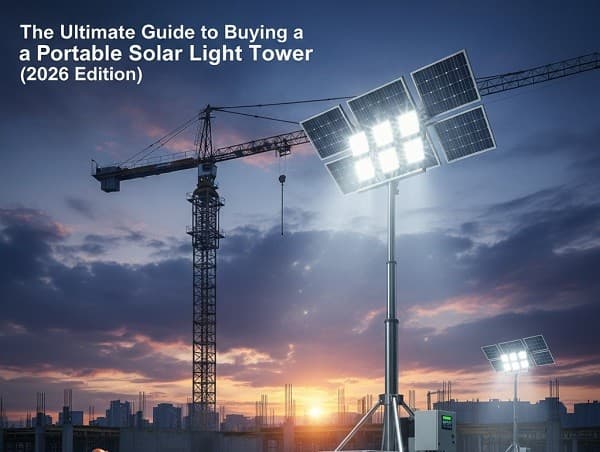
The Ultimate Guide to Buying a Portable Solar Light Tower (2026 Edition)
Buying a portable solar light tower in 2026 is one of the smartest moves a project manager can make. It solves the headache of fuel logistics, eliminates noise complaints, and slashes long-term costs.
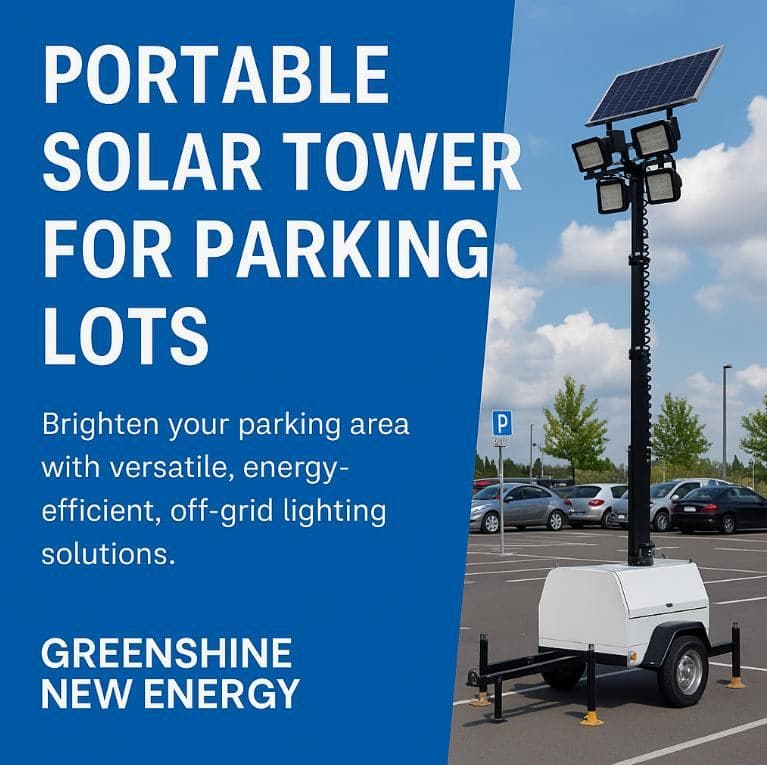
Portable Solar Tower for Parking Lots
At Greenshine New Energy, we provide mobile and portable solar light towers designed to deliver bright, sustainable light anywhere — without wiring, fuel, or utility costs.
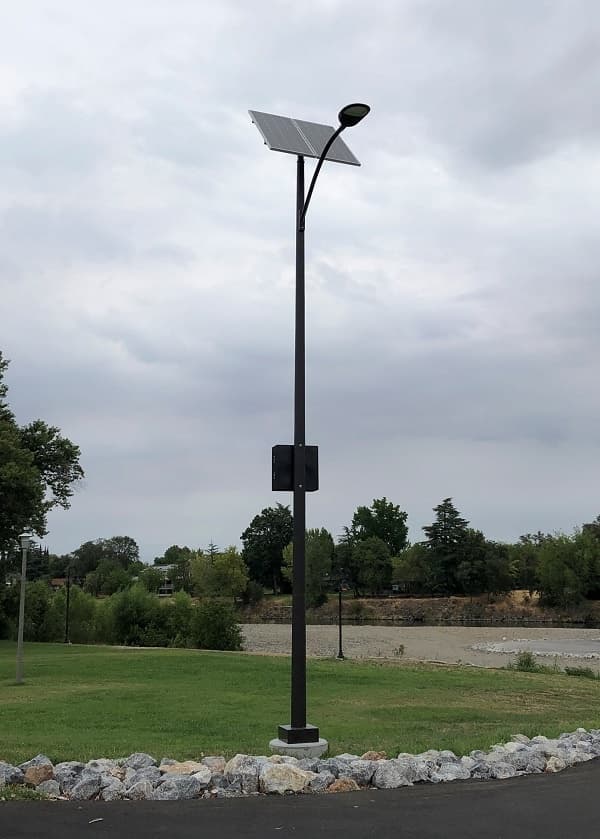
How Tall Are Solar Street Lights and Why It Matters for Your Project
Most solar street lights range from 12 to 30 feet, but the best performance comes from choosing a system designed for your project’s exact conditions — not a one-size-fits-all model.