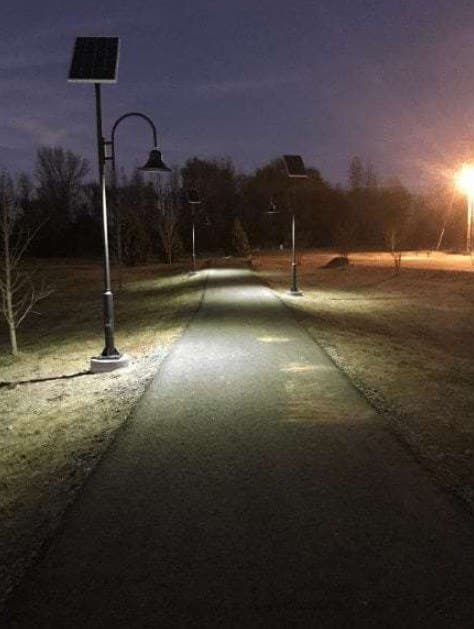
Case Study: How Solar Lights Improved Safety in Rural Communities
The installation of solar lighting at Phillips Landing is a prime example of how rural communities can benefit from innovative, cost-effective lighting solutions.
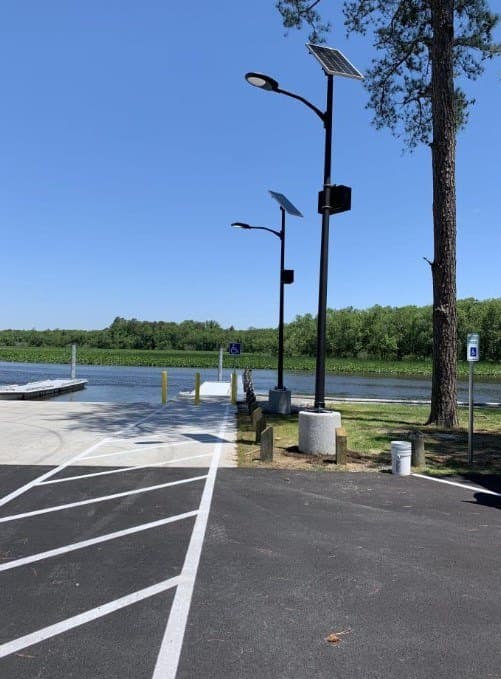
Rural communities often face challenges regarding infrastructure, particularly in areas where access to utilities is limited. This was the case for Phillips Landing, a wildlife park and boating access point to the Nanticoke River in Laurel, Delaware. As part of an expansion project, the park upgraded its amenities with floating docks, kayak launches, a paved parking area, and a stone path. However, one major issue stood out—there was insufficient lighting, and the remote location made traditional lighting options both expensive and impractical. The solution? Solar-powered lights.
This case study highlights how solar lighting improved safety in a rural community, allowing for cost-effective illumination without disrupting the natural environment or the project's budget.
The Challenge
Phillips Landing is a hub for boaters, fishermen, and nature enthusiasts, many arriving before dawn or returning after sunset. The park’s expansion included new amenities, but with no power lines nearby, providing adequate lighting for the newly paved parking lot and surrounding areas posed a significant challenge. Without lighting, navigating the park’s paths and parking areas at night became difficult and unsafe, especially for boaters coming in or out of the river.
The project’s overall budget was already nearing the million-dollar mark, and trenching for electrical power lines would have added thousands more in costs. Trenching would also have disrupted the natural park grounds, potentially requiring closures that would have frustrated the community and harmed the park’s ecosystem.
The Solar Lighting Solution
Faced with the need for a cost-effective, environmentally friendly, and efficient solution, the project managers for Phillips Landing turned to Greenshine New Energy for help. Greenshine proposed the installation of Brighta 40 solar LED lights, specifically designed to provide off-grid lighting without the need for electrical infrastructure. These lights were the perfect solution for this rural park due to their:
- ✓Off-grid capability, eliminating the need for costly trenching and power line installation.
- ✓Environmental sustainability, as the lights operate entirely on renewable solar energy.
- ✓Minimal disruption to park operations, with installation completed quickly and without the need to close off sections of the park.
Greenshine installed three Brighta 40 solar LED lights, strategically placed around the paved parking lot and key areas of the park. These solar lights provided the necessary illumination for visitors to safely navigate the parking area and paths, especially during the early morning and late evening hours when visibility was otherwise limited.
Results and Impact
1. Improved Safety The solar lights have significantly improved the safety of the park for visitors. Boat owners and park-goers can now safely park, launch boats, and traverse the park even before dawn and after dusk. The lighting ensures that paths, parking areas, and access points are well-lit, reducing the risk of accidents and improving the overall experience for everyone using the park.
2. Cost Savings By opting for solar lighting, Phillips Landing avoided the significant costs associated with trenching for electrical lines. Installing traditional grid-connected lighting would have added thousands of dollars to the project and could have delayed the park’s reopening. With solar lights, the park benefited from a more affordable, low-maintenance solution that eliminated ongoing electricity costs.
3. Quick and Low-Impact Installation Unlike traditional lighting, which would have required trenching and the installation of power lines, the solar lighting installation was fast and minimally invasive. This allowed the project to stay on schedule and avoided the need to close the park for extended periods, preserving access for the local community.
4. Environmentally Friendly Solution As a wildlife park, preserving the natural environment at Phillips Landing was a top priority. Solar lighting allowed the park to reduce its carbon footprint and minimize its impact on the ecosystem. The lights operate entirely off-grid, harnessing renewable energy from the sun to provide reliable illumination without harming the environment.
Conclusion
The installation of solar lighting at Phillips Landing is a prime example of how rural communities can benefit from innovative, cost-effective lighting solutions. By leveraging Greenshine New Energy’s Brighta 40 solar lights, Phillips Landing not only enhanced the safety and accessibility of the park but also avoided the environmental and financial challenges posed by traditional grid-connected lighting.
This case study demonstrates the potential for solar lighting to transform public spaces in rural areas, providing safe, reliable, and sustainable lighting without the high costs and disruptions associated with traditional infrastructure projects. Thanks to this project, Phillips Landing can continue to serve the local community and attract visitors while preserving the natural beauty and integrity of the park.
As more rural communities explore the benefits of solar lighting, Phillips Landing stands as a successful model for others looking to enhance public safety while maintaining budget-friendly and eco-conscious solutions.
Professional Consultation
Fill in your project details and one of our lighting experts will get back to you within 24 hours.
Questions? Call us at 949-609-9636
Financing Available
Greenshine partnered with Balboa Capital, a top-rated direct lender, to offer fast, easy, and affordable equipment financing options.
Learn more →